Ayahuasca & Modern Science
We welcome the growing interest that modern science has begun to show in ayahuasca, and we recognize the value of the studies being carried out. Scientific research has revealed many fascinating aspects of the medicine — the chemical interactions, the biological processes, and the ways it affects the human brain and body.
At the same time, we understand that science can only reach so far. By its very nature, the scientific method is limited to what can be measured, observed, and repeated. It cannot step into the spiritual domains where ayahuasca reveals its deepest mysteries and its true potential for healing and transformation.
For us, the studies are encouraging and useful, yet they are but a small reflection of the greater reality of this medicine — a reality that unfolds in the sacred space of ceremony, where spirit, song, and prayer guide the journey.
Study: Ayahuasca for general well being
In a recent study conducted in Spain (Ona et al., 2019), 380 regular participants of ayahuasca ceremonies were interviewed face-to-face using public health indicators, along with indicators of community ties, stress-coping strategies, values, and psychosocial well-being.
The results were compared with the normative data of the general Spanish population. Regular use of ayahuasca was associated with a greater positive perception of health and a healthy lifestyle, among other results.
Fifty-sex percent of the sample reported having reduced their use of prescription medications since they started participating in ayahuasca ceremonies.
Participants who had used ayahuasca more than 100 times scored higher on personal values indicators. The main conclusion of this study is that a respectful and controlled use of ayahuasca taken in community settings can be incorporated into modern society with benefits for public health.
This new approach, based on the use of public health indicators not previously used in ayahuasca studies, offers relevant information on the impact of long-term exposure to ayahuasca on public health.
Ayahuasca and Public Health: Health Status, Psychosocial Well-Being, Lifestyle, and Coping Strategies in a Large Sample of Ritual Ayahuasca Users
Study: Ayahuasca stimulates neurogenesis in adults
Several studies have assessed in vitro the potential neuroprotective properties of ayahuasca compounds. In one of those studies, harmine showed proliferation of human neural progenitors (Dakic et al., 2016).
n yet another study, harmine, harmaline, and tetrahydroharmine (the three main constituents of B. caapi) were found to stimulate adult neurogenesis (Morales-García et al., 2017).
The alkaloids of Banisteriopsis caapi, the plant source of the Amazonian hallucinogen Ayahuasca, stimulate adult neurogenesis in vitro
Study: Ayahuasca to overcome grief following the loss of a loved one
According to a study recently published in the journal Psychopharmacology, ayahuasca – also known as the “vine of the soul” within the Peruvian indigenous healing system – can help people who are grieving the loss of a loved one, significantly reducing symptoms, such as anxiety and depression. Benefits lasted for up to a year following the retreat.
Therapeutic potential of ayahuasca in grief: a prospective, observational study
Here are some interesting youtube videos, and further down you can find some articles and scientific studies:
Studies
- Antidepressant effects of a single dose of ayahuasca in patients with recurrent depression: a preliminary report
- Assessing the psychedelic "after-glow" in ayahuasca users: post-acute neurometabolic and functional connectivity changes are associated with enhanced mindfulness capacities
- Ayahuasca: Pharmacology, neuroscience and therapeutic potential
- Exploring the therapeutic potential of Ayahuasca: acute intake increases mindfulness-related capacities
- Personality, psychopathology, life attitudes and neuropsychological performance among ritual users of Ayahuasca: a longitudinal study
Articles
- Dr. Gabor Mate: Ayahuasca Is The 'Antidote To Western Psychological Distress'
- A puke bucket and an ancient drug: is ayahuasca the future of PTSD treatment?
- Psychedelic drug ayahuasca improves hard-to-treat depression
- Silicon Valley's new craze is flying to Peru to take a psychedelic you can't legally get in America
Around 8 PM, before the ceremony starts, we all gather in the temple for a short meditation to calm down our minds and to tune in. It will be dark, only a few candles lit, the smell of palo santo and the sounds of nature.
You will be placed on a mattress where you can sit or lay down during the ceremony. Here you have time to think about your intention one last time before starting the ceremony.
When the shamans arrive to the temple, you will have the opportunity to ask any questions that you might have. You will also get a short brief on the ceremony rules, and get to know who is facilitating and helping in the ceremony for the night.
The shamans will then go around and check each participants energy field sometimes by putting a hand on the top of your head (crown chakra). The shaman will decide your dose based on how he felt your energies were and previous experience.
If it's your very first time with ayahuasca, you will get an introductory dose.
The introductory dose is a very small dose to observe your reaction. In the following ceremonies, the dose will usually go up gradually. The gradual increase of the dose allows you to slowly and safely step into the experience and establish a connection with the plant before the ceremony starts. When the Shamans are preparing the bottles we get some time to calm down our minds and to tune in. It will be dark, only a few candles lit, the smell of palo santo and the sounds of nature.
Salud Maestro
The ceremony begins. The shaman takes the bottle of medicine in his hands, blessing it with sacred ícaros — ancient songs and whistles that call upon the spirits of the plants. With each note, the medicine awakens.
One by one, the participants receive their dose. When the shaman comes to you, this is your moment to recall your intention — let it shine within you one last time. Then, release it. Empty your mind and prepare to surrender to the current of the medicine.
When you are ready, look at the shaman and say softly:
— Salud, Maestro!
He will answer:
— ¡Que Dios te bendiga!
Then drink.
Find a comfortable position. Breathe deeply. Let go of your thoughts, your expectations, and your doubts. Surrender to Mother Ayahuasca, and allow her spirit to flow through you, carrying you into the mystery, the healing, and the vision that awaits.
Singing to the plants (Ayahuasca Icaros) & Mapacho tobacco
When all participants has received their individual dose of medicine, the shaman will turn of the candles and wait some time before he starts to sing icaros (Healing songs).
The icaros have special connections to the plant spirits (the shamans allies) and are called into the temple to assist and help the shaman to heal a patient during the ceremony. The songs are also guiding our journeys, and they are a very good rope to hang on to during challenging moments.
Through the icaros, the shamans are controlling the energies in the temple, and can work on each patient individually and will assist participants from their altar when running into blockages or challenges in their journeys.
During the ceremony, the shamans will alternate singing and whistling with silence and natural sounds. They will also use the mapacho tobacco smoke during the ceremony.

The Chakapa is an essential tool
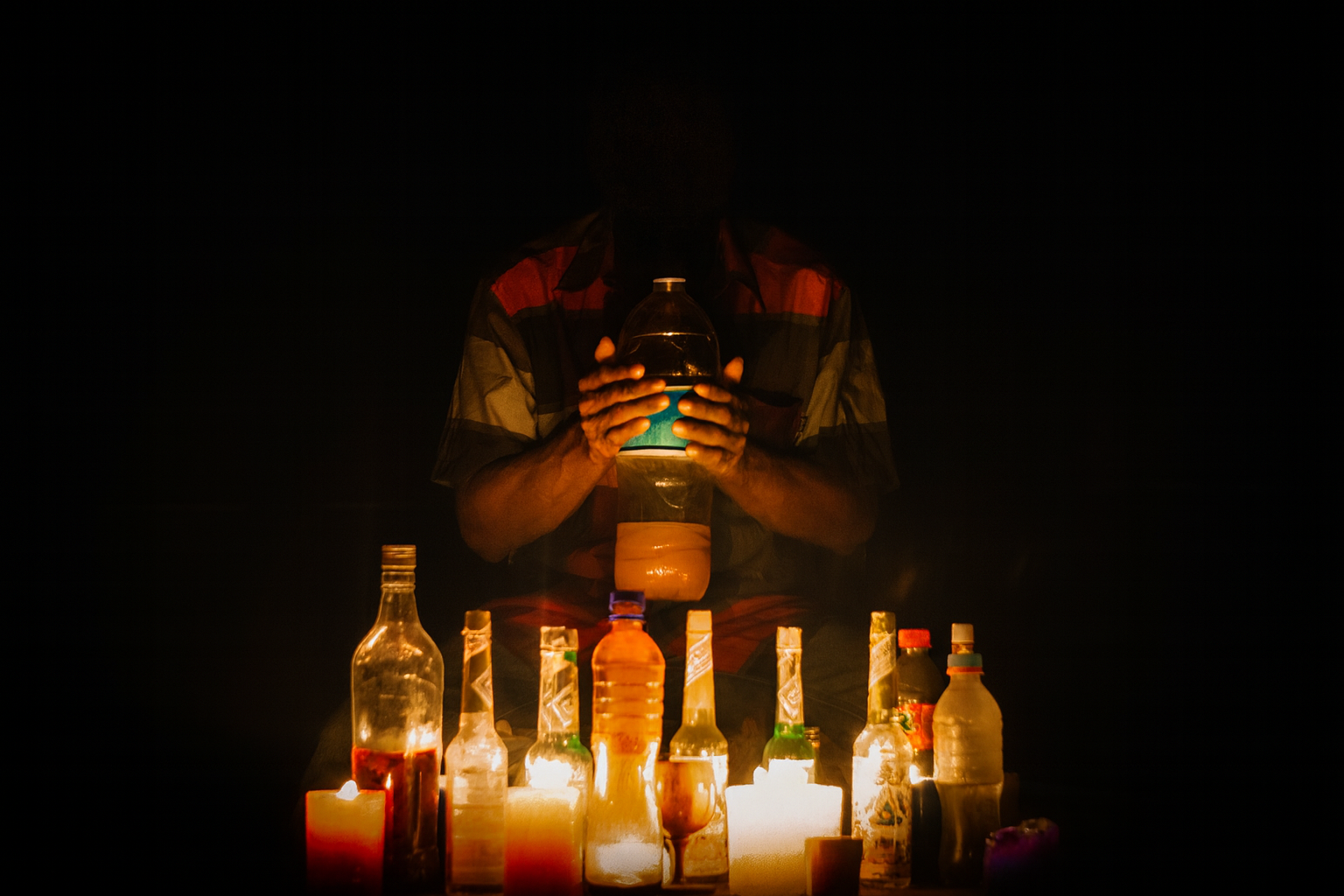
Singing to the medicine is an important part of the ritual.